From Passing By to Walking In: What Can a Commercial Window LED Display Do for Your Store?
Explore SkyFlex CM Series commercial window LED displays for retail stores, featuring up to 4,500 nits brightness, a slim 35 mm cabinet profile, flexible configurations, and indoor or semi-outdoor options.
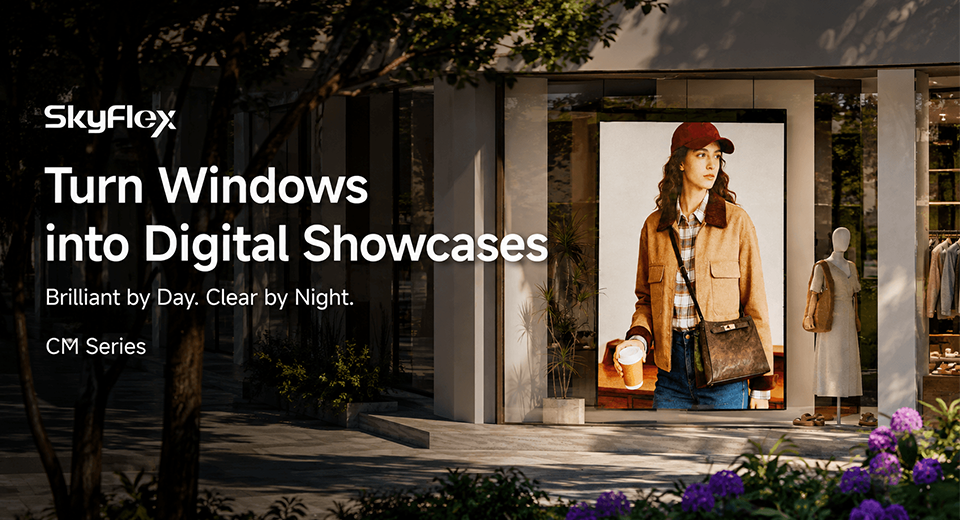
SkyFlex CM Series Commercial Window LED Display Solution
A storefront window has only a few seconds to make an impression.
For a retail brand, that window is often the first place where a passerby sees a new product, a seasonal campaign, or a piece of brand content. A well-designed window can create curiosity and encourage people to stop. A window that is difficult to see or visually disconnected from the store can do the opposite.
This is one reason commercial window LED displays have become an increasingly practical option for retail environments.
Unlike a printed poster, digital content can be changed without replacing the physical display. Unlike many conventional digital signage formats, an LED display can be designed to occupy a large visual area while still being integrated into the storefront itself.
But a retail window also presents some specific challenges. Daylight changes throughout the day. Glass can introduce reflections. Customers may view the screen from a distance and then from only a few metres away. At the same time, the display needs to coexist with the products, fixtures, and architecture already inside the store.
The SkyFlex CM Series is designed around these requirements, with configurations for indoor and semi-outdoor applications.
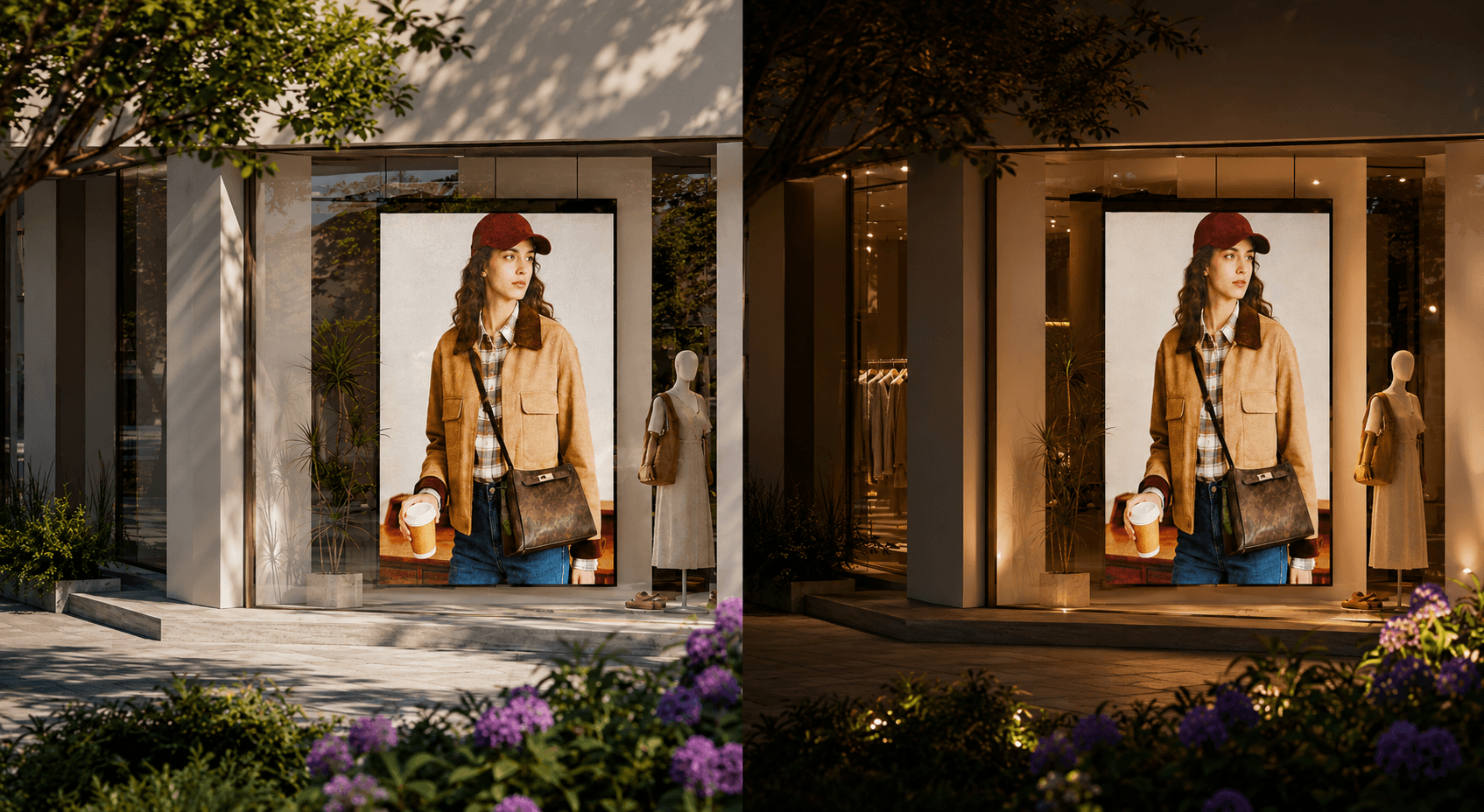
Built Around the Conditions of a Retail Window
A screen installed inside a shop is not necessarily suitable for a street-facing window.
The amount of ambient light can change significantly between morning and afternoon, particularly for windows that receive direct sunlight. At close viewing distances, image quality and colour reproduction also become more noticeable.
For this reason, choosing a retail window LED display is not simply a matter of selecting the largest or brightest screen available. The display needs to match the actual environment in which it will operate.
The CM Series offers brightness of up to 4,500 nits, with indoor and semi-outdoor configurations available according to the application. This provides flexibility when specifying a display for different storefront conditions.
For moving images and promotional content, the series supports 16-bit grayscale and refresh rates of up to 7,680 Hz.
These specifications are particularly relevant when the display is being used for product videos, brand films, campaign visuals, and other dynamic content that needs to remain visually smooth.
The practical objective is straightforward: content should remain clear enough to attract attention from outside the store while still looking refined when viewed at a much closer distance.
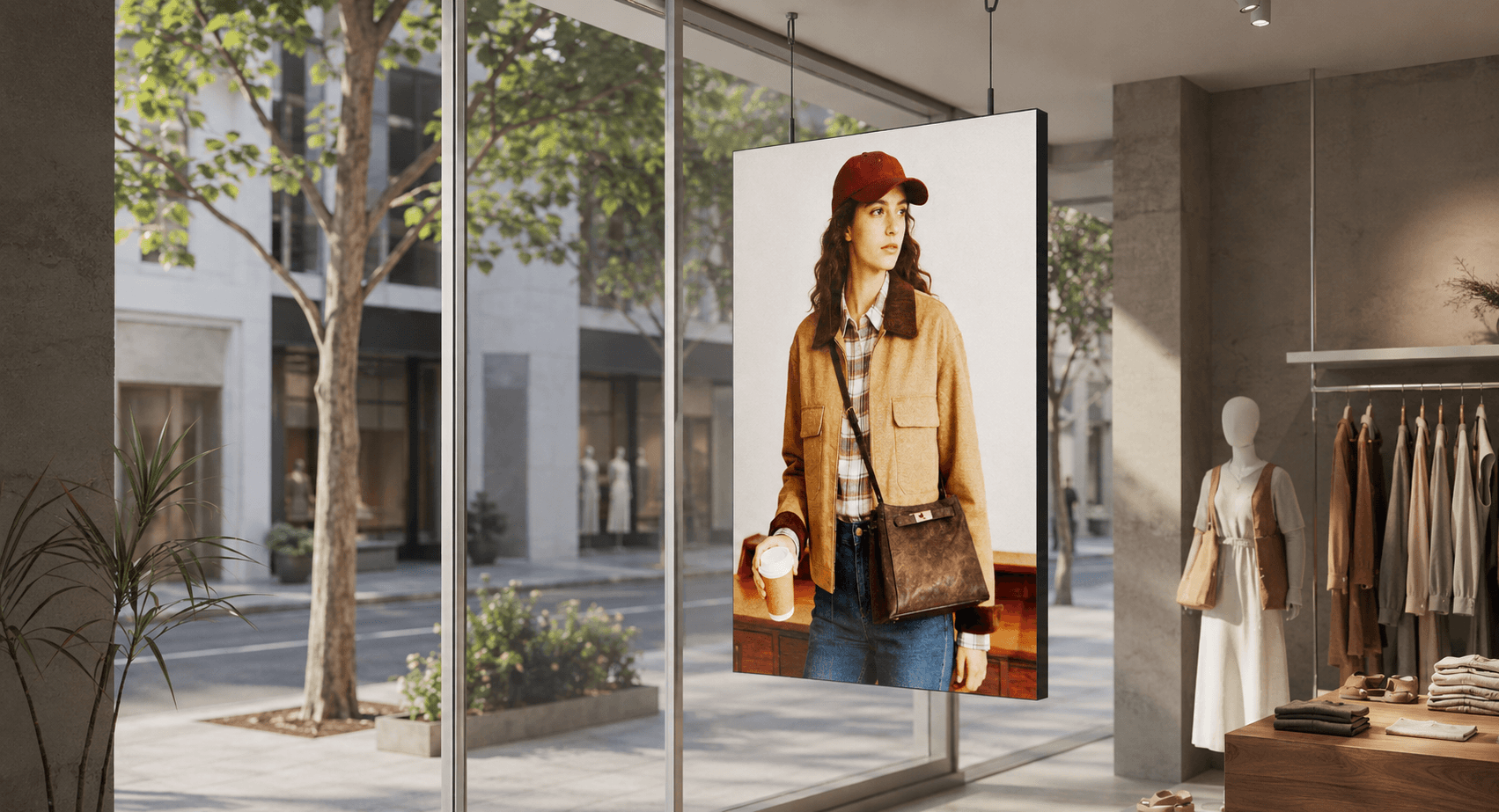
A Slim Profile Helps Preserve the Storefront
In retail, the screen is rarely the only thing competing for attention.
Products, shelving, mannequins, lighting, signage, and other visual elements all share the same space. A display that occupies too much depth or floor area can easily become a physical obstacle or dominate the window.
The CM Series has a cabinet depth of approximately 35 mm, with a weight of approximately 19 kg/m².
For a slim LED display for storefronts, this physical profile can make a difference when the screen needs to be integrated into an existing retail design rather than treated as a separate installation.
The series supports hanging, wall-mounted, floor-standing, and ceiling installation. A suspended configuration, for example, can keep the floor area available for merchandise while still providing a large digital visual surface.
The intention is not to make the technology the centre of the storefront. The display should support the merchandise and the overall visual design.
Flexible Configurations for More Than Flat Storefronts
Not every retail space has a simple rectangular wall.
Corner stores, curved sections, columns, stepped layouts, and other architectural features can make a conventional flat display difficult to integrate.
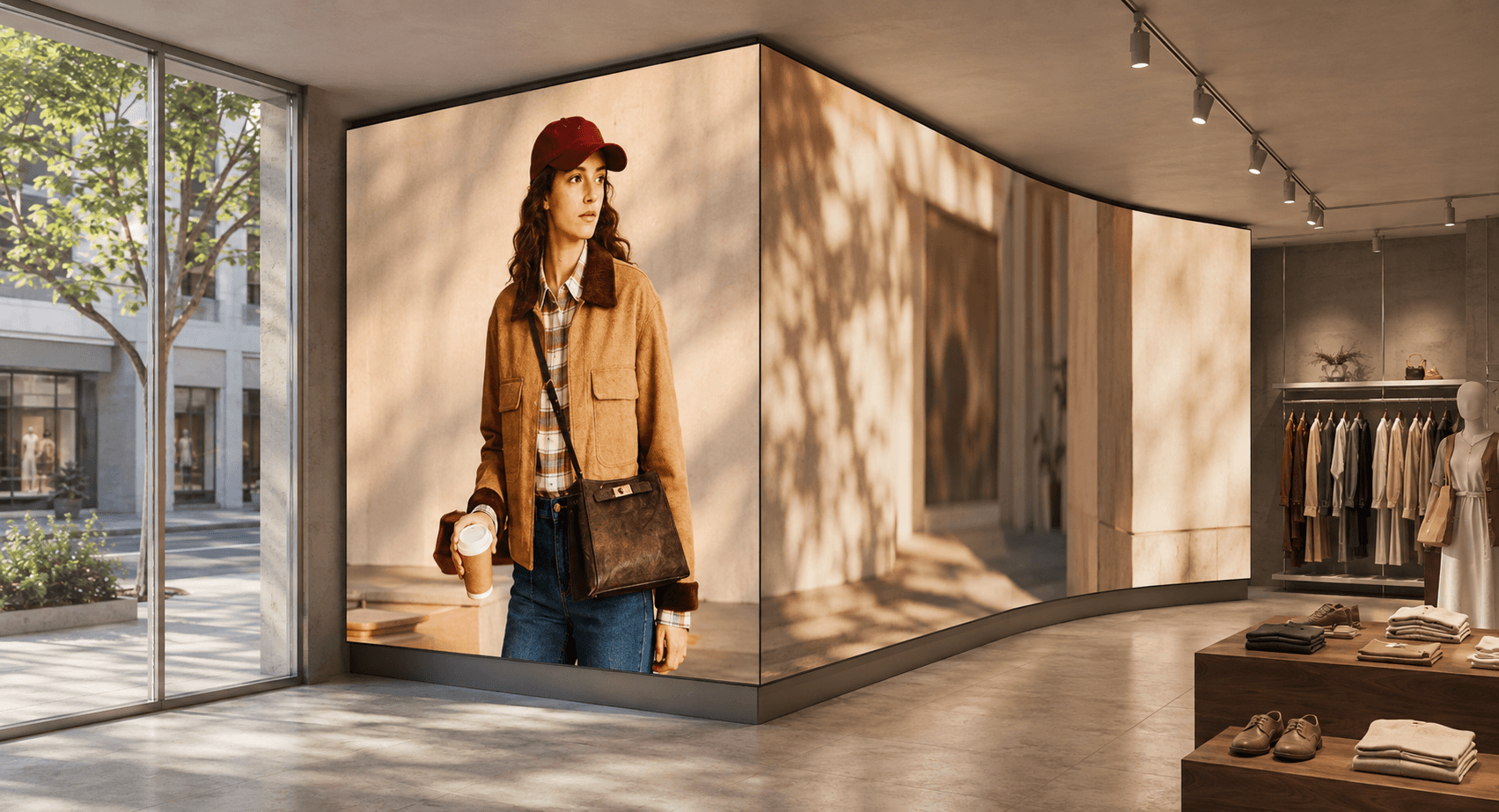
CM Series provides seven cabinet options supporting flat, curved, 90° corner, staggered, and mixed configurations.
That flexibility is useful for projects where the LED display for retail window advertising needs to follow the physical shape of the storefront.
For a standard window, a flat configuration may be all that is required. A corner storefront can use a 90° configuration to continue the visual content around the corner. Other projects may use curved or staggered arrangements to create a more distinctive display surface.
This approach gives retailers and designers more freedom to work with the existing architecture instead of redesigning the space around a standard LED cabinet.
Content Can Change With the Retail Calendar
Retail campaigns are rarely static.
New product launches, seasonal promotions, holiday campaigns, limited-time offers, and brand events can all require different content. With printed media, each change normally means producing and installing new materials.
A shop window LED display changes that workflow.
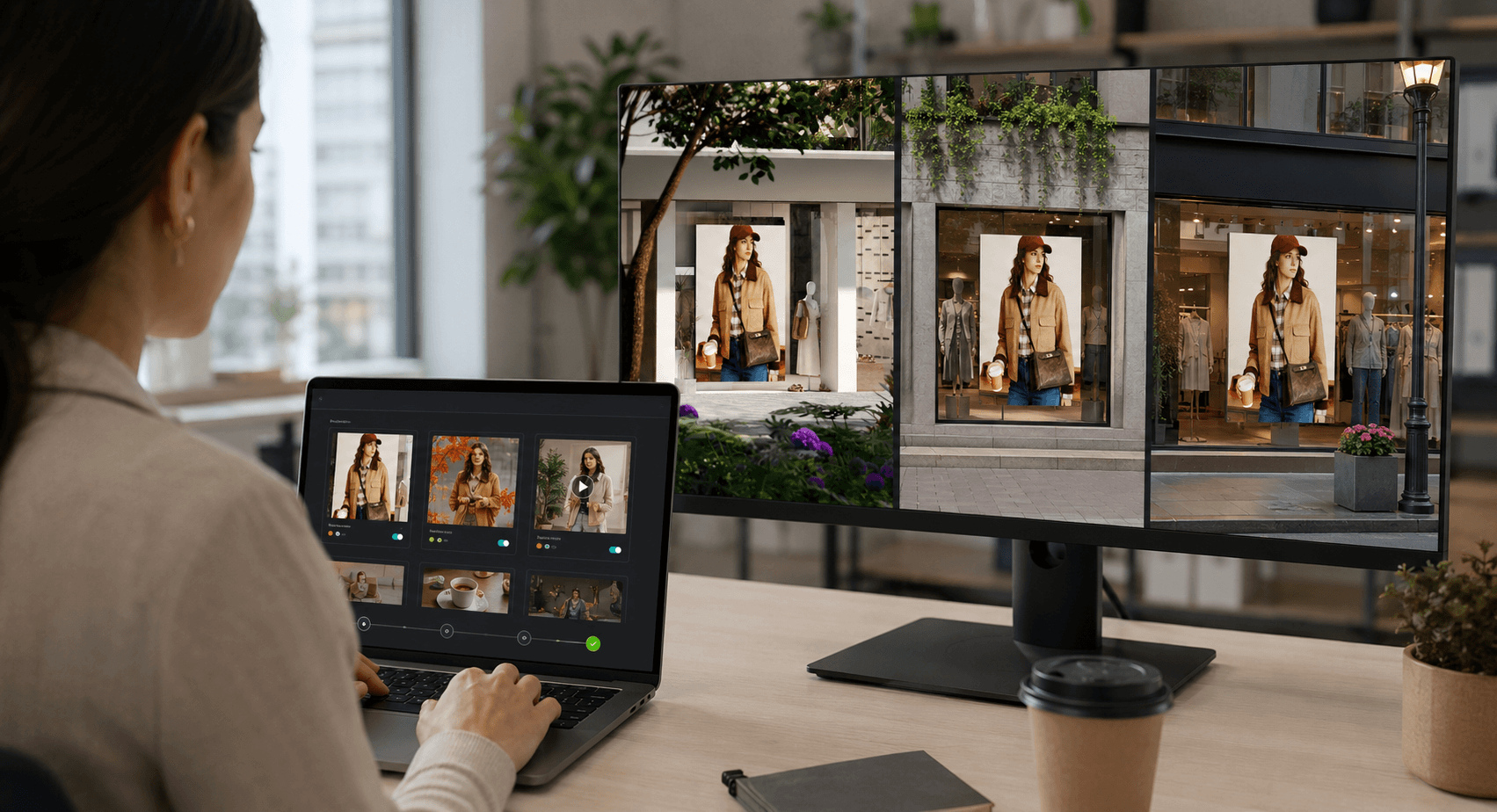
The same display can be used for product videos, campaign graphics, promotional messages, and other digital content throughout the year. Content can be updated without physically replacing the screen, making the storefront easier to adapt as campaigns change.
For brands with multiple locations, a content management solution can also help distribute campaign materials across stores while maintaining a consistent visual identity.
The value here is not simply having a moving image in the window. It is having a display that can continue to serve different communication needs after the original campaign has ended.
Designed for Long-Term Commercial Operation
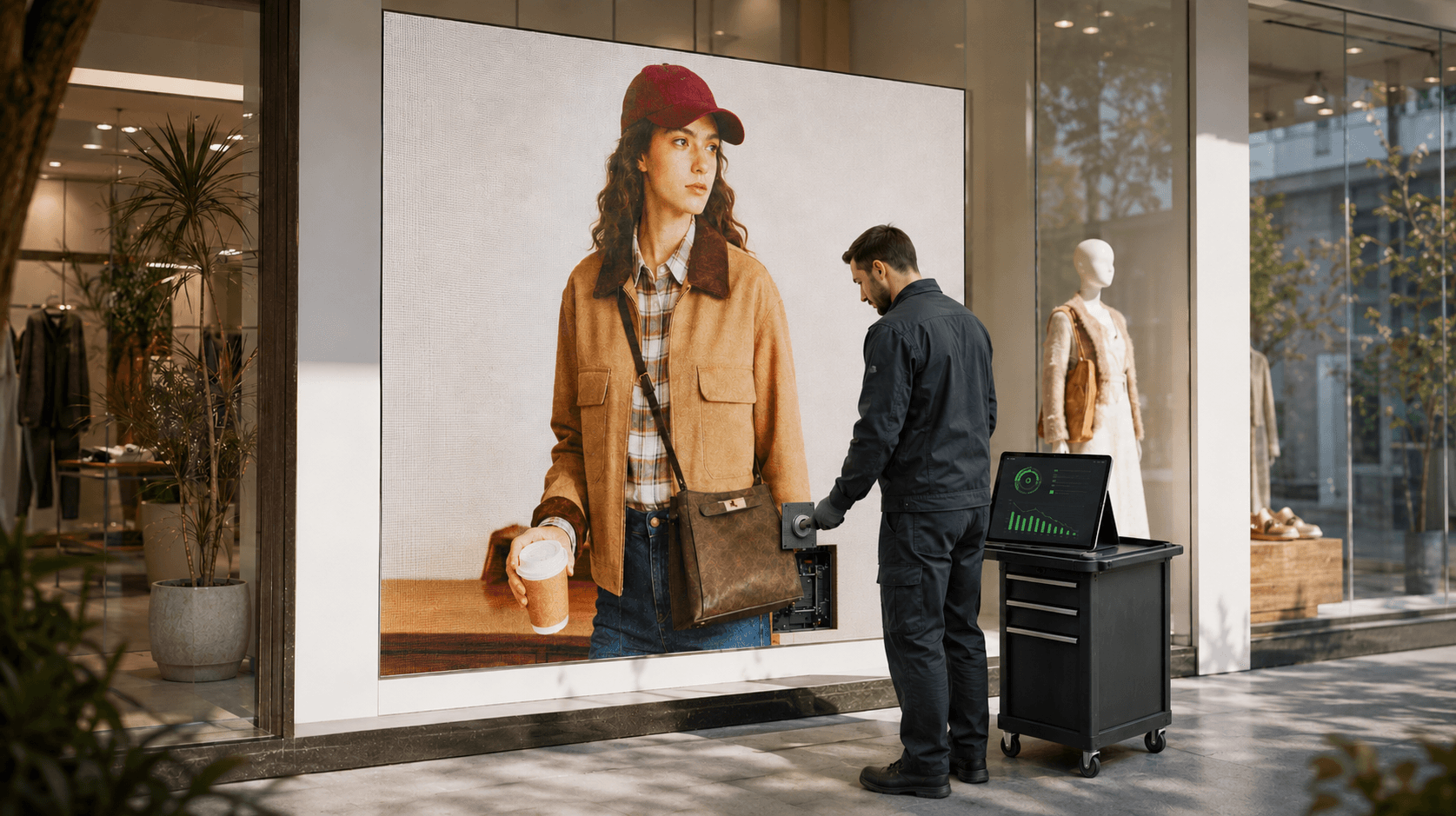
A retail window display may operate for long hours, so product selection should also consider energy consumption, operational reliability, and maintenance.
The CM Series uses third-generation DCD energy-saving technology, with energy consumption reduced by approximately 30% according to the specified product performance.
The series also supports power and signal redundancy, providing additional operational assurance. Front and rear service access can simplify inspection and component replacement when maintenance is required.
For a single retail store, these details affect day-to-day operation. For a brand deploying displays across multiple locations, they can also affect how installation and maintenance are managed over time.
A commercial display should therefore be evaluated not only by how it looks on the day of installation, but also by how practical it is to operate and maintain afterwards.
A Digital Storefront That Can Evolve With the Brand
The role of a storefront has changed.
It is no longer limited to displaying products behind glass. For many retailers, it is also a space for communication, promotion, visual storytelling, and brand expression.
A well-specified commercial window LED display can bring these functions together without requiring a complete redesign of the storefront.
With brightness up to 4,500 nits, a slim approximately 35 mm cabinet profile, multiple installation options, and seven cabinet configurations, the SkyFlex CM Series is designed for retail environments where both visual impact and physical integration matter.
It can support different content throughout the year, adapt to a range of storefront layouts, and provide a more flexible alternative to fixed printed displays.
The best window display is not necessarily the one that attracts attention to the screen itself.
It is the one that makes people notice the store.
Explore the SkyFlex CM Series
For retailers, system integrators, and designers looking for a LED window display for retail stores, the SkyFlex CM Series provides a combination of high brightness, slim construction, flexible cabinet configurations, and commercial-oriented serviceability.
The right configuration still depends on the storefront, ambient light, installation method, viewing conditions, and content requirements. These factors should be considered during project specification rather than treating every retail window as the same application.
That is where the value of a purpose-designed retail window LED display becomes clear: the screen is selected around the store, rather than the store being designed around the screen.
- Previous Article
- Next Article
Contents
Related Articles
More insights from the LED display industry.